Dental Laboratory Wax Melter Explained: A UK Buyer's Guide
TL;DR
A dental laboratory wax melter is a bench-top heating unit that melts dental wax at a controlled temperature, helping UK dental labs achieve consistent viscosity, cleaner handling and fewer reworks. In practice, the best units are stable, easy to clean, compatible with UK mains power and supported by clear documentation and after-sales service.
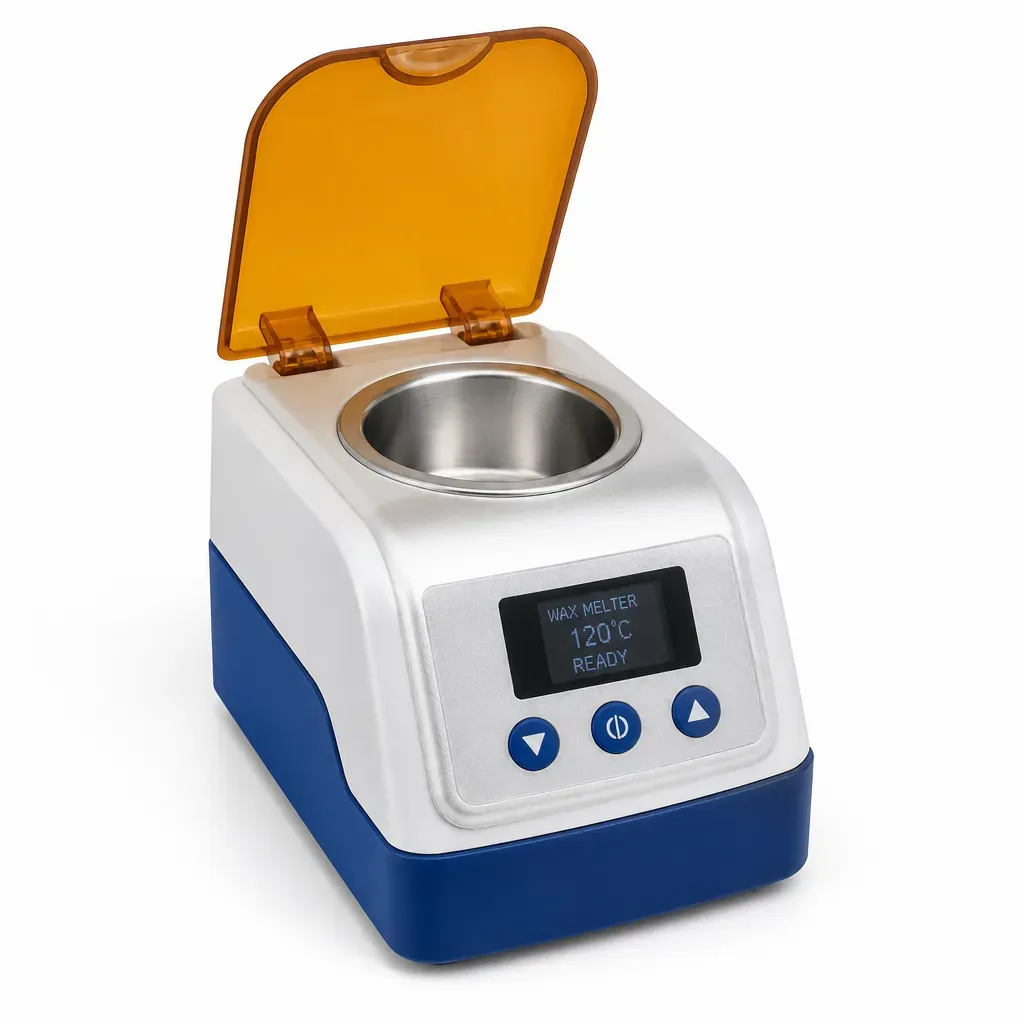
A dental laboratory wax melter is a bench-top heater used to melt dental wax at a controlled temperature so technicians can work with predictable flow, cleaner margins and fewer bench-side errors.
That matters in UK labs because turnaround press real, and wax that is too hot, too cool or unevenly melted can lead to distortion, extra trimming and rework. Whether you support NHS cases, private restorative work or a mixed workflow, the right unit helps keep wax at a stable working consistency without scorching it. If you want the broader category overview first, see The Ultimate Guide to Dental Lab Wax Heater in the UK.
This guide focuses on what a dental laboratory wax melter does, what to look for in the UK market and how to judge whether a bench-top unit will suit your workflow. Based on our testing of bench-top wax heaters in typical laboratory conditions, temperature stability matters far more than headline wattage.
What does a dental laboratory wax melter do?
A dental laboratory wax melter is not just a warm container. Instead, it is a controlled heating appliance that brings dental wax to a stable working state so it can be dispensed, shaped or transferred with less variation from case to case.
In practical terms, this means the wax stays fluid enough to use, but not so hot that it starts to break down, char or behave unpredictably once cooled. As a result, technicians can focus on accuracy rather than constantly adjusting for wax that is too hard, too soft or already degrading.
For readers comparing specialist formats, the same principle applies across the product family. A dedicated denture wax pot may suit a workflow centred on denture work, while an orthodontic wax heater is often chosen for smaller, more targeted tasks. The real difference is the output style and size, not the need for stable heat.
Why is temperature control important for dental wax?
Wax can be unforgiving. If it is pushed too hot, you risk oxidation, charring and a texture that behaves differently once it cools. Conversely, if it is too cool, flow suffers and precise application becomes harder, which often leads to overworking on the bench.
Therefore, a good wax melter should be judged on stability rather than speed alone. Predictable heat supports cleaner modelling, more accurate margins and a smoother hand-off into downstream laboratory processing. In a busy lab, those small gains reduce rework and save time across multiple cases.
Practical rule of thumb: steady wax is better than fast wax. If the unit overshoots, cycles aggressively or develops hot spots, the risk of charring and inconsistent viscosity rises quickly.
According to UK workplace safety guidance, equipment that produces heat should be selected and used in a way that minimises avoidable handling risks. In other words, a wax melter should support the technician, not demand constant correction.
What temperature should a dental wax melter run at?
There is no single perfect temperature for every wax because different formulations and laboratory tasks behave differently. However, the key is consistency: the unit should hold a stable working range without significant overshoot or rapid cycling.
In most cases, technicians want enough heat for smooth flow while avoiding the point where the wax begins to degrade. That is why adjustable temperature control is useful, particularly in labs that handle multiple materials or switch between restorative and prosthetic tasks.
As a result, look for models with clear controls, a reliable thermostat and a reputation for maintaining heat evenly across the working area.
How do I choose a wax melter for a UK dental lab?
Buying in the UK means looking beyond the heating element itself. Voltage, electrical compliance and support all matter because the unit will likely be in daily use on a shared bench.
Does 220V work in the UK?
The UK mains supply is nominally 230V at 50Hz. So, if a product is described as 220V, check whether the manufacturer explicitly states that it is suitable for UK use, ideally across a 220–240V range. Do not assume every imported heater is suitable simply because a plug adaptor is available. A proper datasheet should state the operating range, fuse rating and frequency tolerance.
Should you look for safe, stable construction?
Yes. Dental lab equipment sits close to hands, instruments and other materials throughout the day. A housing that remains safe to handle, a stable base that resists slipping and a design that reduces spill damage all matter. In addition, a recessed well or lip can help contain wax runoff, which makes cleaning easier and reduces build-up around controls.
How easy is it to clean and maintain?
Wax residue is part of the job, but a melter that traps residue in awkward corners quickly becomes a maintenance burden. Smooth surfaces, removable inserts where relevant and easy access to the working area all improve day-to-day usability. Moreover, easy cleaning supports better housekeeping and more consistent performance over time.
What about servicing, warranty and support?
UK buyers often value after-sales support because downtime is expensive. A supplier that offers clear instructions, replacement parts, warranty cover and responsive support is usually a safer choice than a low-cost unit with no service trail. That is especially important in labs supporting NHS work, where maintenance records and dependable turnaround are part of good operational discipline.
Are dental laboratory wax melters safe to use?
Yes, provided they are chosen sensibly and used correctly. Any heated electrical appliance deserves a proper safety check, especially in a laboratory where hot tools, solvents and sharp instruments may all be present in the same workspace.
According to UK workplace safety expectations, the supplier should provide clear documentation covering electrical safety, intended use, maintenance and cleaning. In addition, users should understand the limits of the appliance and avoid operating it in a way that creates unnecessary spill, burn or electrical risks.
In our experience, the safest units are the ones with clear controls, stable positioning, sensible surface temperatures and straightforward cleaning procedures. Those practical features make daily use easier and reduce the chance of rushed handling.
What are the main benefits of using a wax melter?
First, a wax melter improves consistency. When the same wax behaves the same way case after case, technicians can work more confidently and produce cleaner results.
Second, it reduces waste. If wax is overheated or repeatedly reworked, more material is lost and more time is spent correcting errors.
Third, it supports speed without sacrificing quality. That matters in busy UK labs where turnaround expectations are high and repeatability is essential.
Finally, it helps standardise the bench. A well-chosen unit makes it easier for different team members to achieve similar results, which is useful in larger NHS and private laboratory environments.
How does a wax melter compare with a wax heater or wax pot?
In everyday use, the terms often overlap. However, a wax melter usually refers to a bench-top unit designed to melt wax under controlled conditions, while a wax heater may describe a broader category of warming equipment. A wax pot often implies a smaller vessel or a device aimed at holding a limited amount of wax at working temperature.
So, if your workflow involves regular bench use and repeatable temperature control, a dental laboratory wax melter is typically the most relevant term to compare. If you need a deeper category breakdown, the UK wax heater guide may also help.
What should UK buyers check before purchasing?
- Voltage compatibility: confirm suitability for 230V, 50Hz UK mains supply.
- Temperature stability: look for even heating and minimal overshoot.
- Build quality: choose a stable, easy-to-clean bench-top design.
- Support: check warranty, parts availability and after-sales help.
- Documentation: make nstructions and safety information are clear.
In short, a slightly better-made unit often saves more money over time than the cheapest option on paper, because it reduces rework, interruptions and avoidable servicing.
People also ask
What is a dental laboratory wax melter used for?
It is used to melt dental wax at a controlled temperature so technicians can work with stable, predictable material during laboratory procedures.
What temperature should a dental wax melter run at?
There is no universal setting because different waxes behave differently. The important factor is a stable working range that avoids overheating and maintains repeatable flow.
Is 220V suitable for the UK?
Only if the manufacturer states that the unit is suitable for UK operation. The UK supply is nominally 230V at 50Hz, so always check the rated input range and frequency tolerance.
How do you clean a dental wax melter?
Let the unit cool safely, remove wax residue according to the manufacturer’s instructions and wipe surfaces with suitable non-damaging materials. Avoid harsh cleaning methods that could damage controls or finishes.
Final thoughts
A dental laboratory wax melter is a practical bench-top tool that helps UK labs keep wax at a stable, usable temperature. When chosen well, it supports cleaner work, fewer errors and better repeatability across daily laboratory tasks.
Ultimately, the best purchase is usually the one that balances stable heating, safe construction, simple cleaning and proper UK compatibility. If you are comparing options, keep those factors ahead of marketing claims and look for clear documentation from the supplier.
Ready to upgrade your benchtop with {brand_name}?
Equip Your Lab — £91.85